Bow low, my friends! The FAST SON’s coming and you don’t wanna lock eyes when he rises. Yes, it’s LOWBOW, and ooohhhhhh… “All of your future, stuck in your past / you still can’t work out why you’ll never last.” Baby. Sounds like these two rippers were cut fast & loose in ‘72, but no sirree, they got laid down last year right here in the P.R. of C, where time has ceased to be. LOOKOUT! You know the Fast Son moves quicker than the mutants on the bottom of the East China Sea, and “you can’t win with a draw.” LOWBOW, you see, rode from Dublin to D-22 on the wings of a faded dream and rebooted himself in the image of Bo Diddley’s ghost, putting his own grease on them post-proto-punk, gutter-oil-blues stompers we’ve come to need, all gold lamé and lightning speed. LOWBOW’s seen less than the Loch Ness ‘round these parts these days, but you know he’ll be back: that Fast Son won’t stay off the wagon for long.
DINGED UP, on the other side, is just that. Their nearest metropole is Baltimore, for Poe’s sake! Their two tunes on this end of the slab won’t get you too down, but rest assured they are both “Made of Grief.” Recommended for fans of: six-note solos, suburban burnout blues, Saccharine Trust – Paganicons, 21st century garages (they no longer hold cars, just withering ennui and empty space, amps, drums). DINGED UP’s about to rain down on a city near you, USA ladies and dudes. They fly on the late summer winds like a trio of tumbleweeds. Dust off and suit up, Big Red, these two are for you.
LOW BOW
All tracks conceived, written & performed by LOW BOW LOW BOW are Richard Doran (Electric Git & Vox) Michael Cupoli (Drum & Drum)
Audio recording and final mastering by Mr. Yang Hai Song. Summer, 2013 in the People’s Republic Of China.
LOW BOW hope that you find this recording to be of a professional standard. Served best via headphones or on A.M. radio.
Thank you for purchasing this recording legally. Now, why not tell a friend that further LOW BOW recordings of HI fidelity standards can be found at lowbow.bandcamp.com
Engineered by Jason Nicholls Produced & mixed by Joe Rankin & Jason Nicholls All recording, engineering & mixing took place Fall 2013 at Mutant Sun Studio in the U.S.A. Mastered by Chris Bentley in Fall 2013 at The Bunker studio, also in the U.S.A.
[Editor’s note: Pangbianr’s man down under (actually, he lives in Beijing) Bob Blunt writes in with a report on Shaun Tenzenmen, founder of eponymous Australian DIY label/distro tenzenmen. Shaun’s one of the earliest and hardest-working proselytizers of Chinese music abroad. Between his distro, his Alternative China tumblr, his Sino-Australian Music Exchange program, and his general web omnipresence in all matters China-music-related, he is nothing short of an indispensable component of the greater Chinese rock diaspora. If you’re so inclined, you can get 30% off all Tenzenmen releases through Bandcamp during the entire month of June. And here’s Bob with some background on the man behind the Tenzenmen enterprise:]
Fans – those who love what they first hear, they find it, follow it, fuck with it, it fucks with them, then they meet friends, acquaintances, lovers, and presto- a lifetime passes and the memories are sweet, the stories are long, and no matter how many times you scratch the itch, it won’t rub out- it’s in your blood, tiger, so just enjoy it.
Fans again – the people that write fanzines, those that hunt record stores, those that collect old dusty vinyl, have crates of scratched CDs, manage their friends’ bands, and, if they are clued up enough, they may even start a label or a venue of their own, spreading some germs to different corners of the world.
Well, if you get my long-winded drift, then meet Shaun Tenzenmen, he of his own self-named label, and one responsible also for the distribution and touring of fine Chinese bands into Australia, as well as other corners of the world. He’s a trooper, a fan, and a lovely guy.
I couldn’t help first asking him if he was fucking mad to pursue such a thing and all he could say was:
“Perhaps it’s a sign of madness that I’ve never even considered the possibility. I live in Australia so it makes sense to promote music into this country though I’m pleased that I get attention from all over the world. Still, it’s not enough to make me any money, but then that’s not really my motivation.”
Bob Blunt: Of course, it isn’t your motivation, and generally it isn’t with a lot of us. We just like what we hear, and if someone else isn’t sharing the love, the motivation within us to share it somehow is the essential part of what fandom really is. Am I right?
Shaun Tenzenmen: First and foremost I’m a music fan. I’ve always liked my music a little less conventional so even in my youth I would enjoy the weirder ends of the spectrums within a specific genre. For me, it has always been about discovery, whether searching thru the racks in record stores and taking a chance at the look of a record sleeve, or scouring the internet for some obscure gem from a backwater band in a garage. There are plenty of easy ways to find Western music so it seemed less interesting to me to add to that, and instead focus on something that not many other people were doing. After moving to Australia and becoming exposed to many other different cultures, I became curious about music from the East. Japan was already known about, but how about elsewhere? I got curious, I started investigating and I started finding gems! What was particularly attractive was that some of the equivalent music scenes were still in their genesis and hadn’t become segregated by micro-genres or jaded with time. It was a return to the origins of punk and all of what was encapsulated in its ideas. Many of these musicians are dealing with the struggles of daily survival and it’s amazing to see the communities born out of this adversity. As a comparatively rich observer, I felt I could lend my support to these scenes by promoting them and making it easier for others to discover them just as I had.
Shaun left England for Australia in 1994 when he was 27, thankful that he had been exposed to a burgeoning punk scene that even made it to Dorset in the south. It was there that the seeds were sown for his love affair with punk and DIY culture, which he still can’t shake off and wouldn’t want to. Here goes his background story:
ST: Whatever romantic notions you may have about England, it’s not a great place for a young lad prone to depression to grow up in. I found solace in the punk scene as best I could living in the countryside in Dorset. During the late ’70s and early ’80s, punk was such a huge phenomenon that it had penetrated even the remotest parts of the country, so yes I’m thankful for that. I was a vocalist in a couple of bands and after growing up a little I got somewhat involved in the organization of shows with a bunch of friends. I was also writing a bit for local zines and was somewhat immersed in the DIY ethic which was born out of the Crass/anarcho-punk scene. Not really having any idea about my future at this point though, when I fell in love with an Aussie girl I accidentally found my escape!
BB: How did that transpire in Sydney then?
ST: I sought and found the local punk scene here in Sydney and quickly got involved with it, most notably putting together a complete Aussie special edition of Maximum Rocknroll. Also at this time a record label I had been involved with released some noise recordings I had made back in England and this went under the moniker of Tenzenmen – it’s a bit of a collector’s item and may finally see a re-release on cassette through a good friend in Finland. Anyway – that was the start of the name, though I wouldn’t see or use it again for another 10 years.
BB: So what spurred you on as a kid then? I’m guessing you for postpunk blood?
ST: Looking back further I can remember my mother taking me to see her boyfriend’s folk band playing in pubs around the Lake District – I was 5 years old. She had a limited music collection but I really remember the band Mud and Lonnie Donegan standing out because they were so much faster than the other things she had. Next thing I remember is I’m watching Top of the Pops, as much of the nation did every Thursday night, and these out-of-control freaks are playing “Pretty Vacant”. I tell my mum that the bass player looks like Frankenstein. I’d start taping things off the TV (cassette tape – no video back then!) and I kept listening to this track and remembering the performance. And that was it – punk rock fever set in at the tender age of 10. I was quite rigid in the music that I allowed myself to like back then and I had to sit through some awful disco music to hear the occasional punk tune, but in retrospect, I was hearing a lot of great music in that period and it all had an influence. The definition of punk was also extremely broad and that is something that has really stuck with me so it is of particular annoyance seeing kids these days just go and see one style of band play, especially on a mixed bill lineup. You don’t have to like everything you hear – but to me, it’s all punk. In fact, this is a phrase we used a lot back in England in the early ’90s as gentrification was taking place: “It’s all punk rock, innit?!”
Twenty years on from 1977 Shaun became curious about China, and particularly its influence around Sydney at that time. You indulged in all things Chinese, am I right?
ST: I started going to the library and reading whatever I could find – be it history, culture, anything. I made myself a profile on an old China Friend Finder website, signed up for [Chinese chat program] QQ and started making friends. With the help of a few of them, I took the plunge and headed over in 2001, having no idea what to expect, which in turn produced a myriad of amazing stories that I needn’t bore you or any of your readers here with. Asides what was amazing about this first trip was that it was much cheaper than I expected and I could afford to go again six months later. Of course, both these visits coincided with the May and October holidays, as that was also the only time my new-found friends had time off from work. On the second trip I picked up a weekly English-language newspaper which was only about 10 pages, but it was great to be able to find something I could actually read. In there was an article about this tiny, tiny punk scene in Beijing. Very curious, the only clue I had about it was that they hung out somewhere near a train station (whose name I forget now). Of course, I went there and only saw thousands and thousands of your everyday Chinese going about their daily lives. No pink Mohawks and no leather jackets.
Shaun then took the plunge starting Tenzenmen, and it was then that he first toured a Japanese band, Limited Express, inAustralia. Through this, he was able to garner a shitload of contacts for people to help book the shows, and then…
ST: Everyone was coming to me and asking me the same questions – who do I contact here or there to book a show. I decided to start keeping a database to share this information with everyone, and as that expanded, I started investigating who would you contact in all the Asian countries to do the same thing.
BB: And China?
ST: Through all this investigation I found out what I could about those punks in China. Through an amazing set of circumstances, I ended up back in Beijing in 2007 and went to D-22, as I had a feeling this was the place to be. And boy, it sure was. What I saw there was amazing to me. In just six short years something was born out of almost nothing. And the energy and enthusiasm were infectious – I couldn’t really believe what I was seeing and it felt like I was watching history happening. Whilst some of the music was very Western-inspired, I was pleased to see a couple of bands really push the boundaries with what they were doing. I don’t remember all the bands I saw but I reckon it was all the top ten bands at the time. Can’t believe how lucky I was to have been in the right place at the right time.
BB: Now that it has been boiling for some time now, how do you see it all evolving?
ST: This is a difficult question for me to answer as I haven’t been to China for 4 or 5 years now, and as you well know, things change constantly there. I think already there is a feeling that artists need to take more control over their own destinies. Perhaps 7 or 8 years ago there was only the dream of being signed and somehow being made famous. I think these illusions were quickly shattered as everyone, as elsewhere in the world, is struggling with how to be able to make money with music these days. Piracy culture is even more prevalent in China than elsewhere, so artists know they really need to engage with their audience. There is also the two-pronged approach to promotion with bands obviously keen to market themselves abroad, but I think increasingly now bands and artists are more aware of nurturing something locally as that is really the long game.
BB: What about punk and DIY attitudes. Is there a real voice there?
ST: Continuing on this thought about developing a local scene really plays into the punk and DIY attitudes. It’s a grassroots thing and this is how I see it surviving. There will always be artists kicking against the pricks even as others fit into the mainstream or leave through frustration. There are already small waves starting to happen in the more experimental genres (who truly fit the definition of punk these days).
The ambiguity of terms like “indie” and “alternative,” and the marketing of them at will, to some extent “punk” also, can have a blurred effect on what people’s perception of style and voice really is. Shaun has some interesting thoughts on this:
ST: DIY is a very ambiguous term these days, and will probably transform in the same way “indie” has changed over the last 30 years. For me, DIY has developed out of the early punk cultures where one took control of their own work and output, and didn’t necessarily buy into the existing systems in place which generally benefit others rather than the artists themselves. If I analyze the work I do, it is not correctly called DIY as most things I do are for the benefit of the artists. I just do my best to break even and if I don’t that’s no big issue as this is my passion. When you ask about labels I assume you mean such as “punk,” “DIY,” “indie” etc – to me these are just quick identifiers that point in the general direction of a sound but it’s all very vague these days. It’s pretty useless and pointless to debate what does and doesn’t fit into one label or another. Just listen to the music and decide if you like it or not!
But your question also begs the question about labels such as Tenzenmen or EMI etc. From my point of view, I see Tenzenmen as a literal “label,” like Heinz or Louis Vitton for example. It might help identify for people something of quality or meaning when compared with something from another label. I push artists to take as much control of their work as possible. To be honest, I shouldn’t even have to do Tenzenmen – artists can do everything for themselves! And this has become the case quite often with artists coming to me saying they already have a product, everything already paid for and ready to go – nothing for me left to do except promote and distribute. These artists are keen to be part of the Tenzenmen label because they might see it as an advantageous association or they’re happy to help build a little community of understanding around the label. (Maybe there are other factors I don’t know about – I guess it’s a question for the artists.) Either way, it’s all positive and indicative of a culture of everyone pitching in to help each other to make something happen.
BB: So what now? I mean you’re a 9-5er in an office gig, where do you get your strength and longevity to do this love of your life?
ST: I’m worse than a 9-5er – I’m generally on call 24/7/365 and often have to work over weekends too. My strength is in my passion for what I’m doing. I do question my sanity on a weekly basis, and there are a lot of things to get down over, but there always seems to be something that comes along that picks it right back up for me. Right now I’m hoping to do a 7″ with a new-ish Sydney band that I’m really excited about. It reminds me of the traditional 7″ from the late ’70s – not in sound, but in style. A two-minute infectious pop song gem on the A-side and a more experimental, longer track on the B-side, which starts to stand out the more you play it. I don’t know if this will end up on Tenzenmen, but it is things like this that keep me excited. In amongst all this, there’s so much great stuff coming from China, too.
So the main struggle is time and how to wind down. I do have the help of a friend or two now – one who sends out the weekly mail list for underground/non-commercial shows in Sydney, a list which has come out weekly for the last seven years or so. And also a young web guru who helps me out with the website and also ideas to help promote what I’m doing. Ideally, I’d love to be able to start working with someone who has the same keen attitude who could keep Tenzenmen going as my involvement drops off, as I have plans to go live in South East Asia myself and kick back if I can remember how. Otherwise, I think I might have to draw a line in the sand sometime in the next few years and say, that’s it for the label for now.
[Editor’s note: I’ve been sitting on this article for far too long. In that time Tenzenmen has pivoted in the direction of focusing even more exclusively on Chinese music. I asked Bob to oblige my sluggishness in posting this by hitting Shaun up with a few quick followups:]
ST: As for now I’m pretty much doing what I’ve always been doing — helping with distributing Maybe Mars and Genjing products around Australia.
BB: A labor of love hey?
ST: It’s what it is. That’s not to say there’s no interest. I mean it is still a niche thing. As always there are things in the pipeline and who knows what is in store for this year. But really I’ve been seeing and feeling that for the last 2 or 3 years.
BB: What do you mean by that?
ST: What I mean is that things grow fairly organically and at a steady rate, but obviously not fast enough for me to make a fortune and retire though…
By the time of release in the US, Snapline’s ‘Future Eyes’ (produced by Martin Atkins (PiL/Pigface)) didn’t meet the constantly evolving vision of the band. With the support of Beijing label Maybe Mars, the band re-recorded many of the tracks and added others to complete something that more clearly expressed their artistic direction. For Snapline ‘Phenomena’is a recording of clarity, keeping all the sounds pure – presence, tone, rhythm and frequency are all united. Vibration, sound, recording, phenomena – Snapline softly mix all these things together.
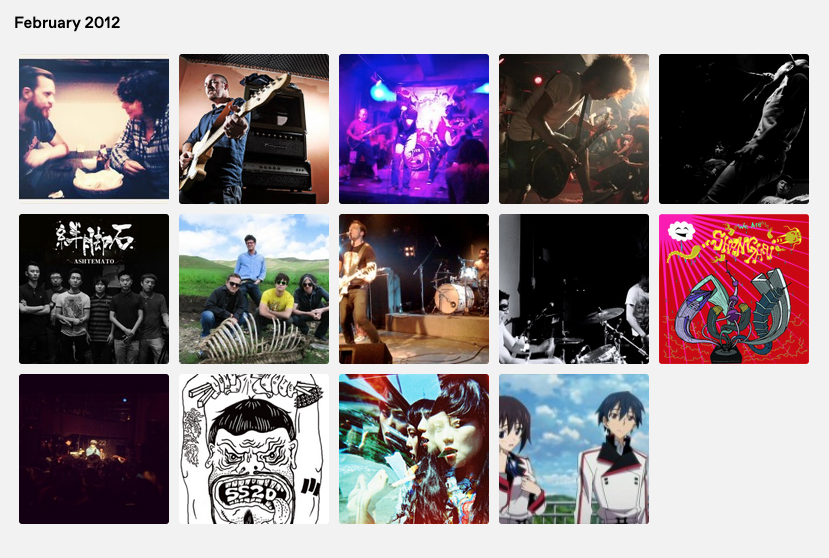
DaBaoGe, Layabozi, Brad Ferguson, Shanghai 24/7, Mensheng, Rock In China, Die In Velvet, Monkey King, Changsha, Ashetemato, Chengdu, Moon Tyrant, Arcane Saints, This Town Touring, Friend Or Foe, We Are Shanghai, Beijing Gig Guide, AV Okubo, Snapline, The Gar, D-22, SS20, Helen Feng, Nova Heart, The Spill
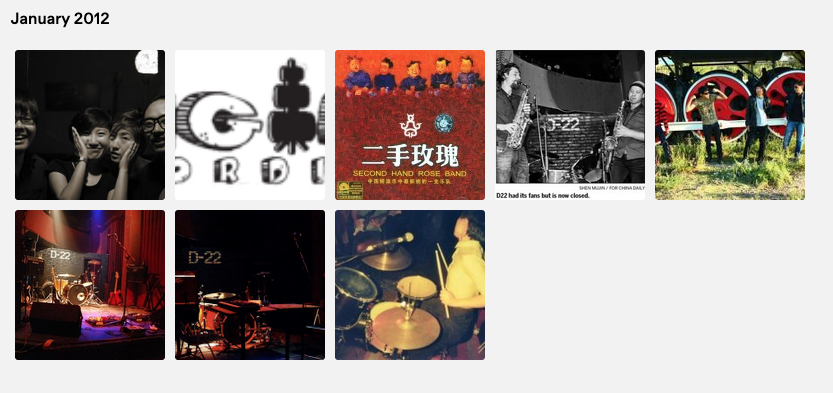
Layabozi, Duck Fight Goose, Zang Nan, Rainbow Danger Club, Rock In China, Jonathan Campbell, China Daily, D-22, Brian Offenther, Pangbianr, Trash A Go-Go, Andy Best, Michael Pettis, Maybe Mars, Zaza Zhang, Share In Obstacles, Eyes Behind, Yang Haisong, After Argument
2008 and 2009 has seen the formation of an impressive group of young bands in Beijing that are different from their predecessors and prove that the now-legendary generation of bands that started in 2004 and 2005 are by no means the final phase of the explosive creativity of Beijing music. Grouping themselves under the name of Generation 6 as a way of asserting their differences, these young bands perform with a level of confidence and sophistication that comes much more naturally to them than to the bands that preceded them.
For much of the decade, pioneering musicians in Beijing had struggled to develop a scene with very little history to guide them. Most of them looked to foreign bands for their models because there was no home-grown talent that could offered them inspiration on how to be a Chinese rock and roll band.
But the Generation 6 bands grew up in a completely different environment. For them China, and especially Beijing, offered one of the most exciting music scenes in the world, with a wide variety of innovative and successful bands and musicians that had received attention not only in China but throughout the world.
There are at least fifteen or twenty very good Beijing bands that consider themselves part of Generation 6. Many of them see their home base as D-22, which has in the past year turned away from the music that made the club famous in 2007 and 2008 to dedicate itself primarily to this new generation of bands. Maybe Mars has selected four of the most representative bands to introduce the Generation 6 bands to a wider audience. This will be great chance to see early on the bands that will dominate interest over the next three to four years.
Four selected bands in album:
In just two years Rustic has become one of the most talked-about bands in Beijing because of their outrageous performances and hard-charging glam rock style. In early 2010 they went to London to represent Asia in the Global Battle of the Bands and unanimously took first place – the first time every judge had agreed on the winner. They consider Joyside to have been their key inspiration although they regularly show up at the gigs of Demerit and all their favourite Beijing punk bands.
When Birdstriking’s drummer, who grew up in Jinzhou, had to choose which university he would attend, there was no doubt in his mind that it had to be in Beijing because he wanted to be able to catch every performance of his favorite band, Carsick Cars. Heavily influenced by their sonic exploration, as well as by the intensity of P.K.14, Birdstriking’s urgent music have made them one of the key bands of the young experimental musicians who congregate around Zhu Wenbo’s Zoomin’Nights.
Flyx is a young punk band who combine a driving energy with an ability to craft beautiful songs, almost pop songs, much like their heroes, punk gods Demerit.
The band Old Fashion’s name is from lines “I am not old fashion” of Audrey Hepburn in George Cukor’s old movie My Fair Lady. They keep “old” traditional rock & roll way, as well as keep “anti-old” musical creative idea. After four years’ growth, Old Fashion has found their way from garage-revival to disco punk and become a popular band among the youth.
They love giving impromptu shows on Tuesday nights. They love playing in unconventional configurations. They love making sounds out of anything they can carry on to the stage. They love unpredictable musical performances. They love making one song constantly became another. They love the Zoomin’ Night.
Zoomin’ Night – the name of a song by P.K. 14 – is also a series of shows of experimental music / noise rock held every Tuesday at D-22 in Beijing. It was inspired by other experimental music series such as the Waterland Kwanyin, Sugarjar Sunday Listen- ing and Sheng Dong Ji Xi. Reflecting the type of music they create, most of the Zoomin’ Night participants are creative and young musicians. They arrange sounds, start new bands and re- group constantly. They have found a home at D-22 and profess to draw their inspiration from Beijing’s energetic cacophony.
In January 2010, Yang Haisong came to D-22 to record all their live shows that month. Most of the bands recorded were newly formed in 2009. Maybe Mars selected 9 songs from the recordings, putting them into a compilation. Additionally, buyers can download 32 additional tracks with a download-code enclosed in each CD.
On November 19-20, 2010 the premiere of this compilation album was held at D-22. There were 8 groups of performers including: noise rock, psychedelic rock, post-punk, minimalism, improvisation, and synthesizer mu- sic. Most of the performers are included in this album.
The Zoomin’ Night on November 23rd was the official “after party” for the premiere: five young musicians who took part in the album gave a personal solo performance, ranging from classical music to atmospheric experimental, and from minimal electronic music to industrial jazz.


 1994ever