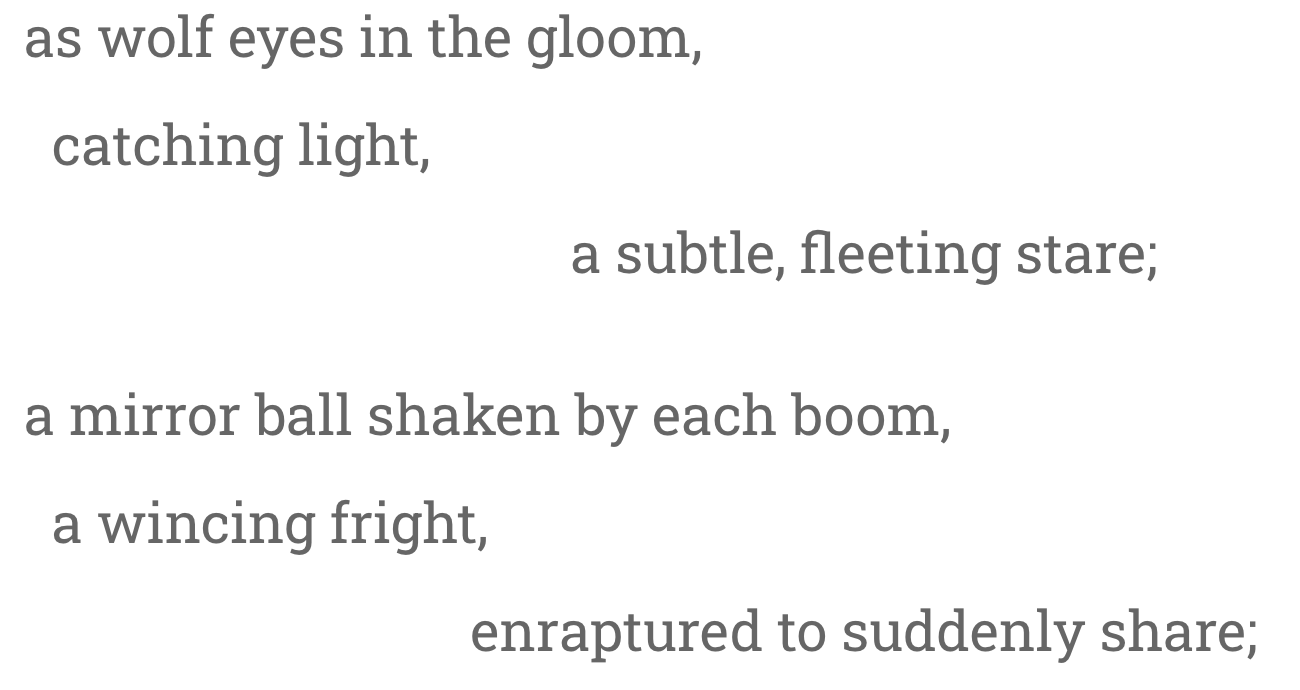
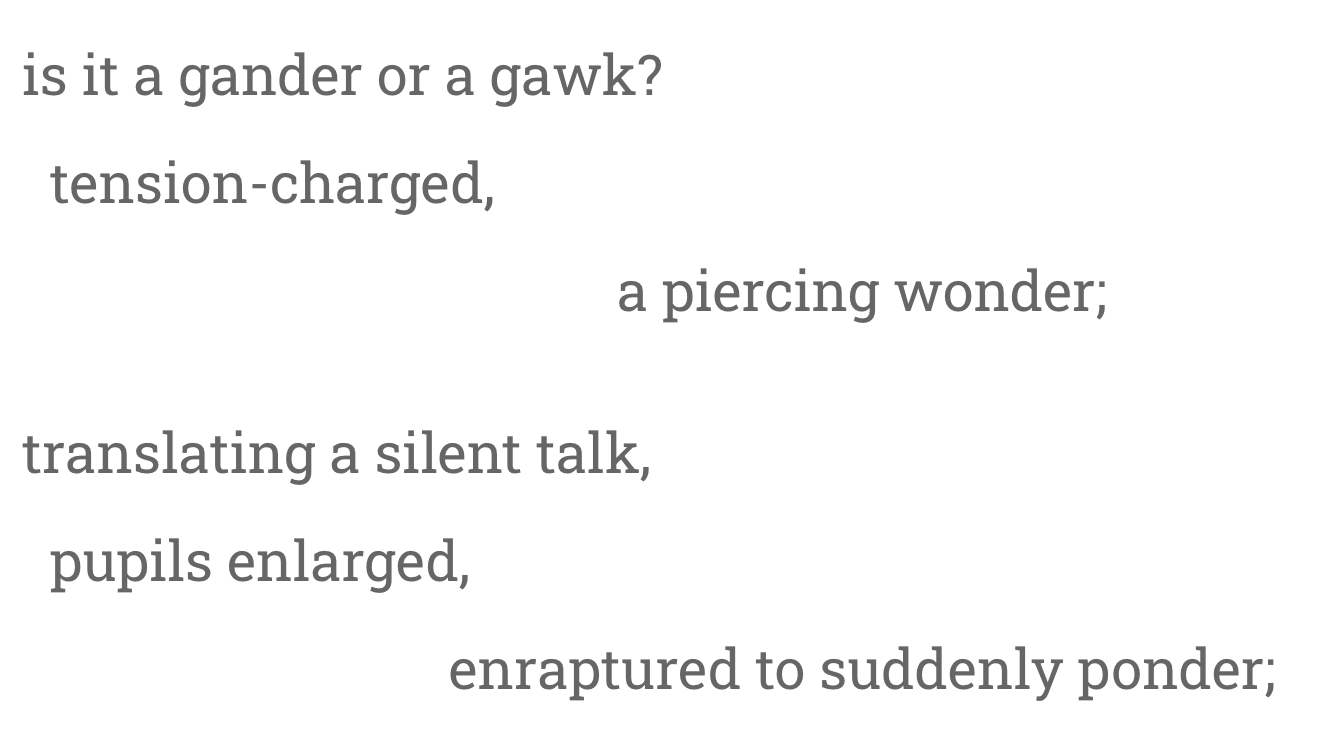
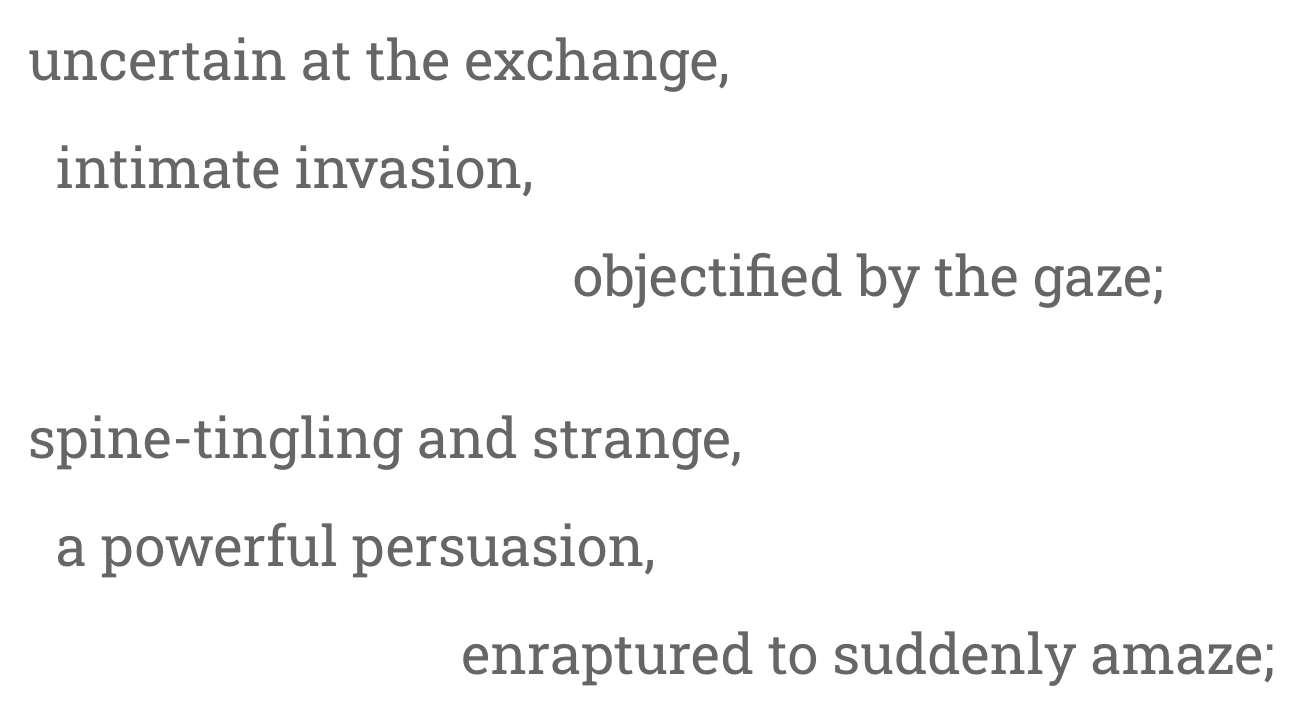
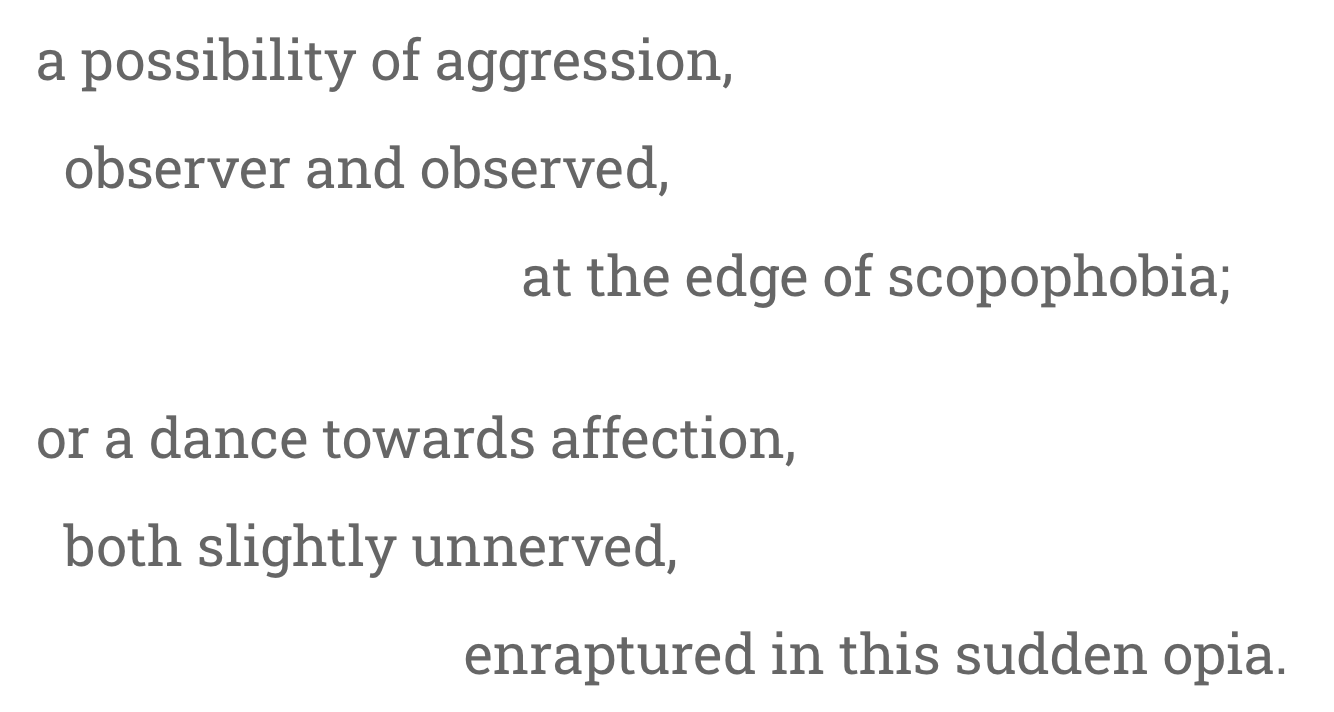
I was working on this poem when the W3 prompt arrived to write about silence and I have somewhat jammed my poem into it, so it doesn’t quite fully meet the criteria but here it is anyway. Above, formatted as desired and below is what WordPress decides to display it like.
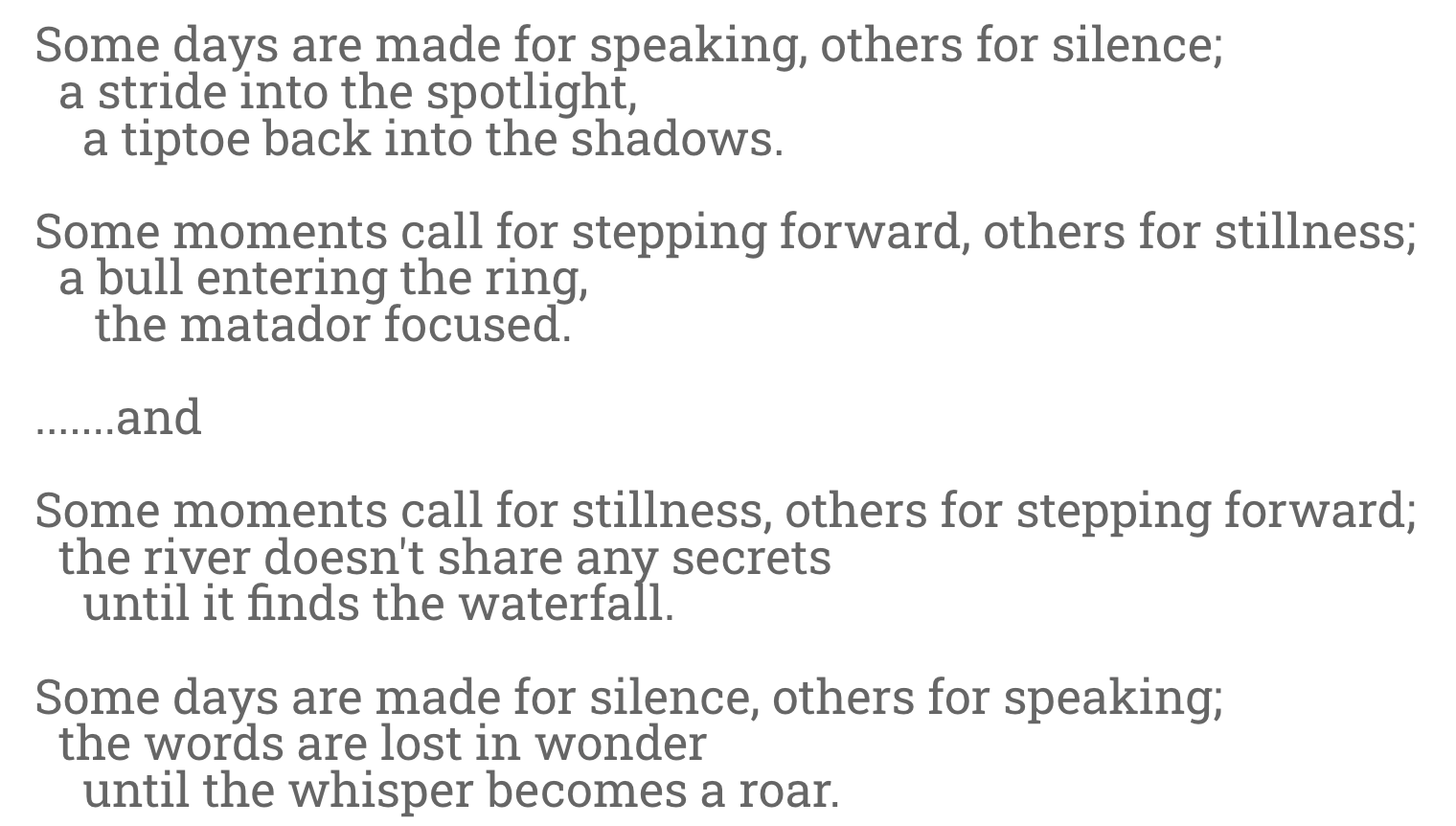
Some days are made for speaking, others for silence; a stride into the spotlight, a tiptoe back into the shadows.
Some moments call for stepping forward, others for stillness; a bull entering the ring, the matador focused.
…….and
Some moments call for stillness, others for stepping forward; the river doesn’t share any secrets until it finds the waterfall.
Some days are made for silence, others for speaking; the words are lost in wonder until the whisper becomes a roar.
Énouement n. the bittersweetness of having arrived here in the future, finally learning the answers to how things turned out but being unable to tell your past self.
French énouer, to pluck defective bits from a stretch of cloth + dénouement, the final part of a story, in which all the threads of the plot are drawn together and everything is explained. Pronounced “ey-noo-mahn.”
I recently listened to the No Dogs In Space podcast’s four-part series on the band Joy Division and though this poem is shared for the W3 prompt of ‘scape’, I couldn’t get away from the word ‘escape’. The first line popped into my head (in reference to lead singer Ian Curtis’ suicide) and then Joy Division song titles flowed forth to fill in much of the rest of the poem. The title is taken from the second and final Joy Division album of the same name and can be understood in either way, to be near something or the end of something.
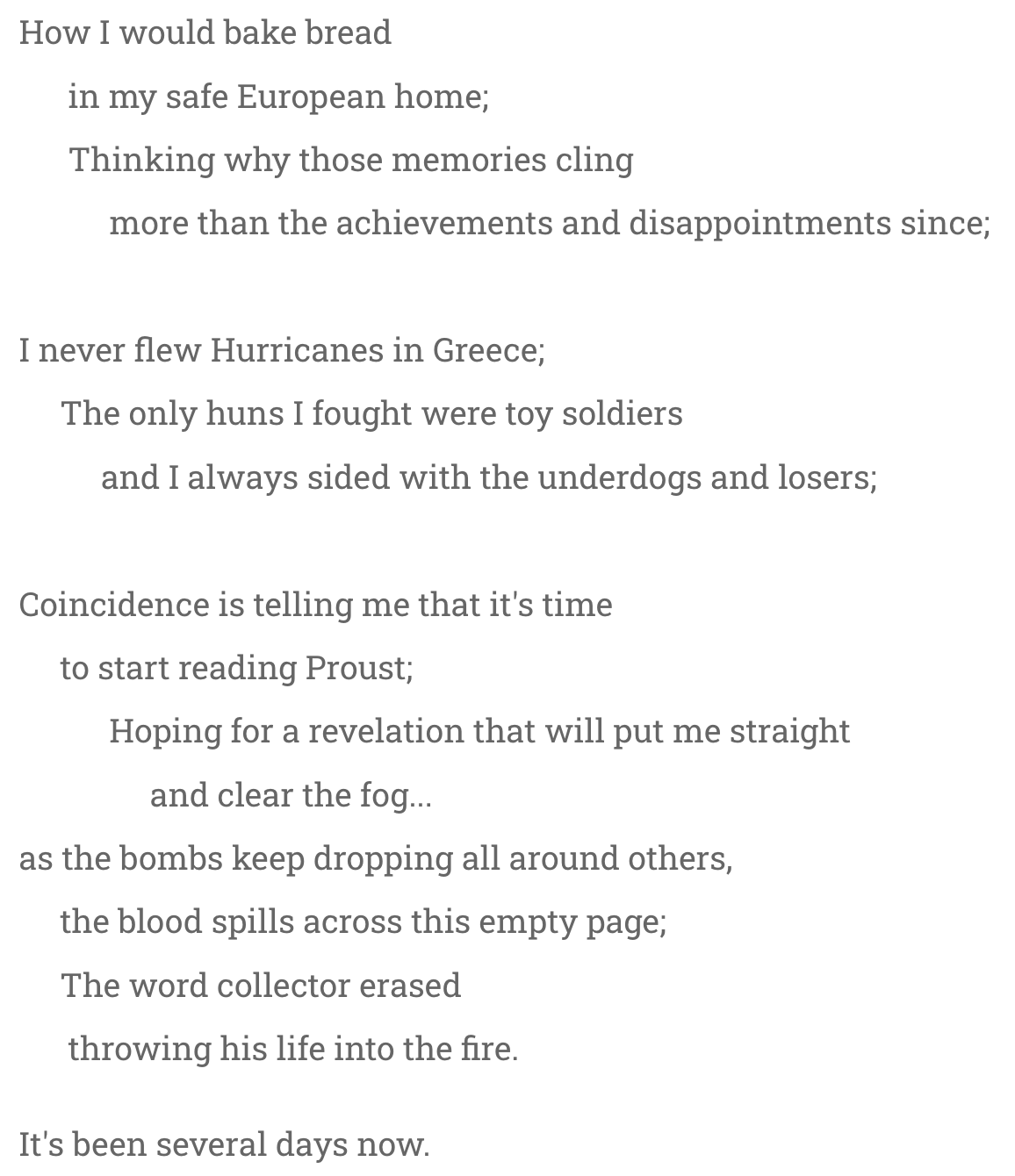
The line ‘How I would bake bread in my safe European home’ is a reference to a time when I was about 12 and, with the help of my mother, I started baking bread. As I was obsessed with the Clash at the time I baked some bread rolls that spelled out the letters C-L-A-S-H, ‘Safe European Home’ being a song from their second album.
The line ‘I never flew Hurricanes in Greece’ is a reference to Roald Dahl and his book ‘Going Solo’ about his time as a fighter pilot in WWII. I just finished reading his book today. The mention of Proust is because I will start reading ‘In Search of Lost Time’ soon.
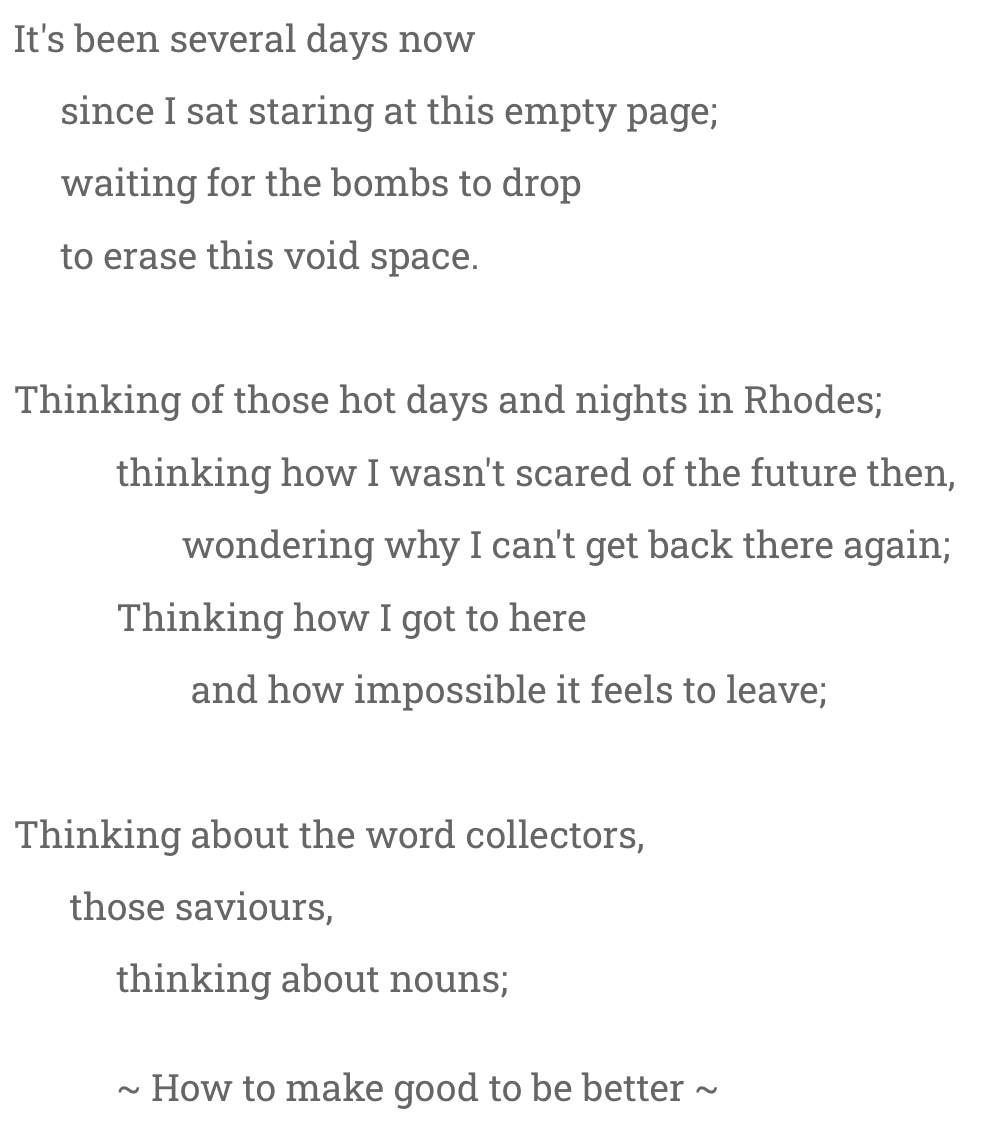
This poem is about not knowing what to write, knowing what to write, knowing what is important and the futility in sharing a few words with a few people.
The second part involves running it through the N+7 machine, where I have taken the following extracts to recompose, revise and make this new poem:
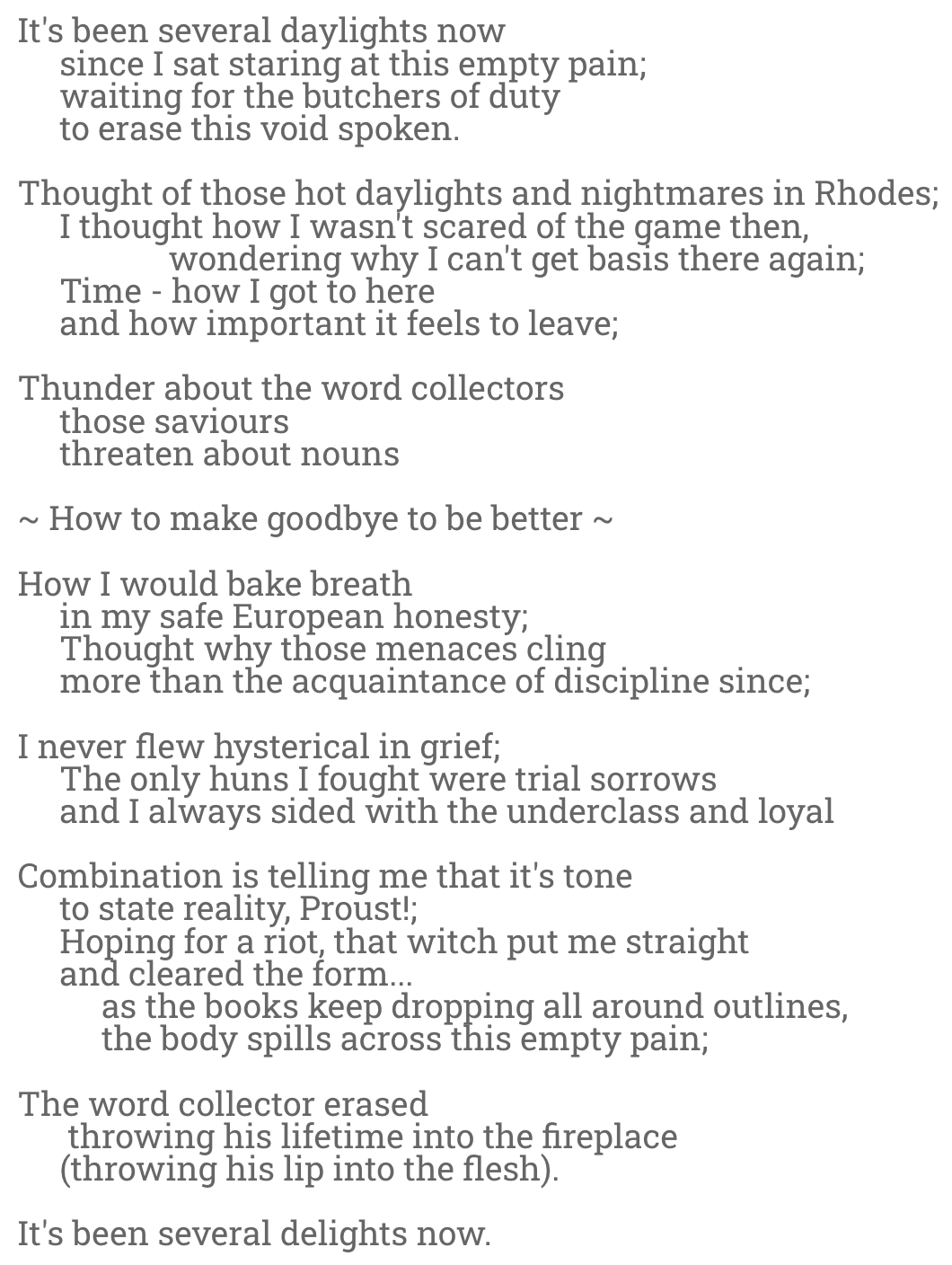
Captured above to maintain format.
The Underclass
It’s been several daylights now since I sat staring at this empty pain; waiting for the butchers of duty to erase this void spoken.
Thought of those hot daylights and nightmares in Rhodes; I thought how I wasn’t scared of the game then, wondering why I can’t get basis there again; Time – how I got to here and how important it feels to leave;
Thunder about the word collectors those saviours threaten about nouns
~ How to make goodbye to be better ~
How I would bake breath in my safe European honesty; Thought why those menaces cling more than the acquaintance of discipline since;
I never flew hysterical in grief; The only huns I fought were trial sorrows and I always sided with the underclass and loyal
Combination is telling me that it’s tone to state reality, Proust!; Hoping for a riot, that witch put me straight and cleared the form… as the books keep dropping all around outlines, the body spills across this empty pain;
The word collector erased throwing his lifetime into the fireplace (throwing his lip into the flesh).
Written for W3 Prompt #160: Pick a single abstract noun that carries weight, mystery, or tension for you—something like liberty, danger, truth, love, exile, justice, forgiveness, joy, grief, silence… Don’t use it until your poem’s final line. Start each line with a description or action that leads us toward the noun, not from it. This is called left-branching syntax—it means delaying the main subject or verb. You’re working with delay, accumulation, and unfolding. The noun you’ve chosen arrives only at the end. Until then, build around it, toward it, beneath it. Let readers feel its shape before they hear its name. From Deepseek: The word “opia” is a fascinating and relatively obscure abstract noun that captures a very specific, almost paradoxical feeling. It refers to the ambiguous intensity of eye contact—that unsettling, electric sensation when you lock eyes with someone, and the moment feels both intimate and invasive, vulnerable and powerful.
A search for corners finds one amiss this may, for a moment, mildly amuse;
She’s incomplete, though nearly whole, so the hunt continues along for a while;
The missing part may be under wraps or lying beyond the end of her ropes; Every day, a new donning of caps becomes the method by which she copes;
All your playbooks, now ripped and torn, watching in wonder, awaiting your turn; Under a bridge or to the manor born, there’s a fire inside, ready to burn; So she’s a puzzle, a partial form, Yet here she stands, resolute and firm.
A waltz wave and forced erasure poem. I wrote the original poem (below) for this prompt at W3 Prompt #158: • Form: Waltz Wave; * A single, unrhymed stanza of 19 lines; * Syllabic: 1–2–1–2–3–2–1–2–3–4–3–2–1–2–3–2–1–2–1; Theme: ‘Strength and vulnerability’
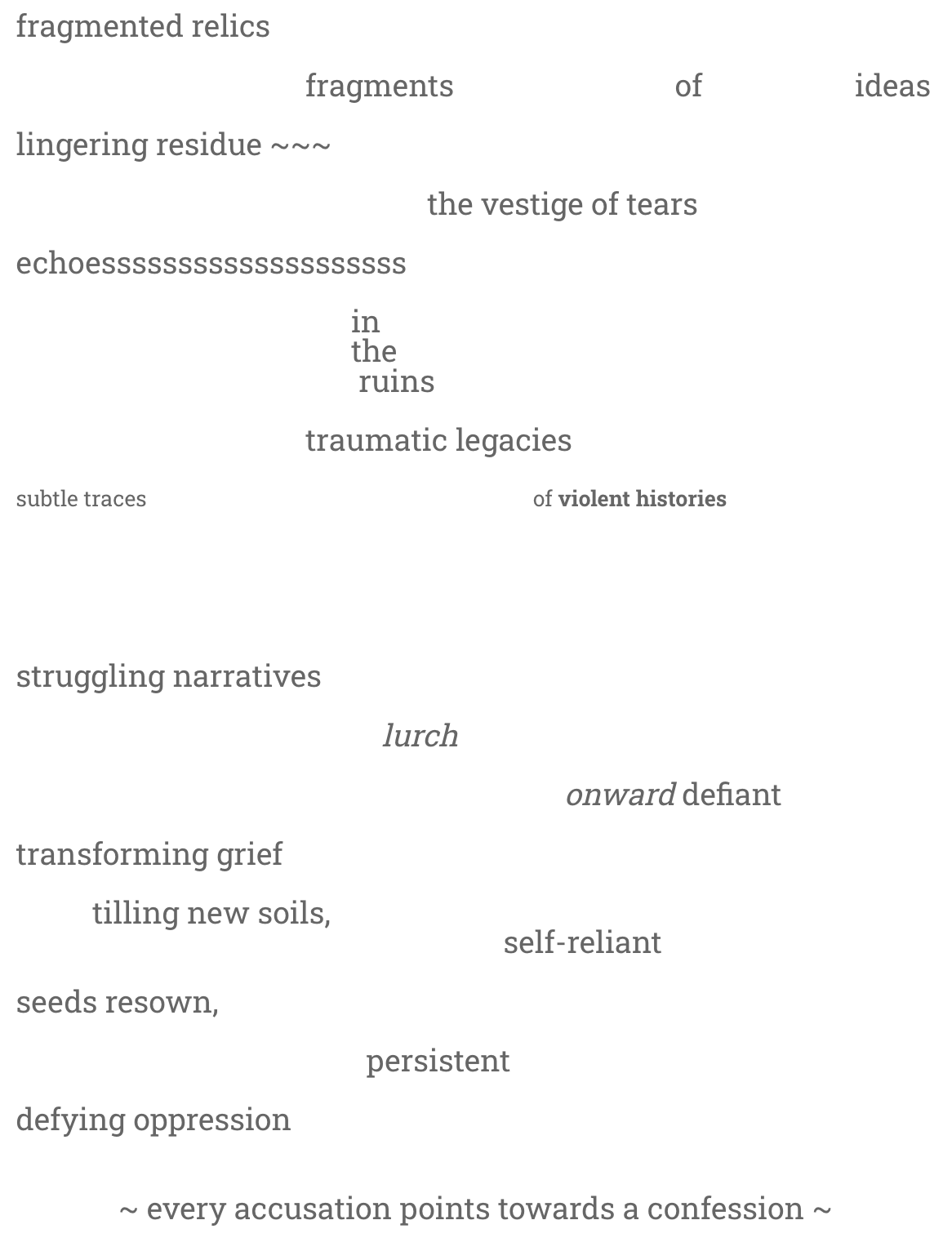
While thinking about formatting, I felt like an erasure poem would be interesting, but how? I made it so with a little help from Deepseek.
steel soft hands bend not breach
iron will I won’t break apart
a diamond under pressure still shines through my tears