Travellers – Traveller – 23rd September 2011

Cat #: 074TZM

Traveller is a world music collective started by Wu Junde in 2008. Their style draws heavily from contemporary folk music from western China. In addition to Wu Junde himself, collaborators and members of Traveler are some of the most prominent artists in the domestic folk scene, including Zhang Zhi, Wen Feng, Chen Zhipeng, Zhu Fangqiong, Wan Xiaoli, Zhou Laoda, Zhou Shengjun, Wu Buli, Hugjiltu, Da Song, Wang Xiao, Xiao Zhou and others. 

Their musical backgrounds are ample and quite diverse; lead singer Wu Junde played bass in Tongue, IZ, and Hanggai before founding Traveler; Zhang Zhi is an expert at guitar, dombura, bass and keyboard and plays various other instruments, was the lead singer and bassist for psychedelia band, and once organized 9 Songs Music Festival in Karamay, Xinjiang. In 2010, breakout performer Wen Feng received Los Angeles KAZN FM1300’s Best Drummer Award, and in the same year participated in the American Music Awards’ Ribbon of Hope ceremony. Da Song gave up his work as a fine arts teacher in favor of a nomadic musical lifestyle, allowing him to develop his interest in African drumming and to introduce this form to Lijiang, Yunnan. 

Traveller’s sound synthesizes a wide range of genres and influences. With traditional styles as their starting points, they add the timbres of dombura, Mongolian sanxian, Xinjiang hand drum, and other distinctive folk instruments, producing an amalgamation of folk ballads, world music, Kazakhstani music, and Chinese classical music, to name just a few. The group’s releases include a self-titled album, “Traveler,” “Nikele” with Zhang Zhi; “Son of Dark Horse River” , with Wang Xiao; and “Far Away”, with Xiao Zhou. 

The Performance of Identity​ and One Man’s Orchestra – 1st March 2011

Cat #: 050TZM

He Guoheng, known in the world of music as Xiao He, is one of the most creative and influential artists in the Beijing music scene. Besides his recordings and his solo and ensemble music performances, he is active in drama, writes incidental music, and is a creative force in the underground movie industry. He is also the head of Maybe Horse, a Maybe Mars sub- label dedicated to supporting and developing Beijing’s and China’s most innovative folk and ethnic musicians. 

At the same time Xiao He, which is the alias he settled on for his folk and improvised music performances, played guitar, drum and accordion at River, a legendary old Beijing folk bar. Between these two projects Xiao He quickly developed a serious following among artists and music fans in the China music scene. In 2003, Modern Sky, China’s largest independent label, released his first CD, a live recording called “The Bird that Can Fly High Landed on the Cow that Can Run Fast”. Almost immediately this was received as one of the most important recordings in contemporary Chinese music. 

Except for a very few special performances with Glorious Pharmacy, today Xiao He only plays solo performances. Calling these multi-faceted improvised performances “Free Folk”, as much to express his anarchic playfulness as to suggest the total freedom which he approaches musical instrumentation, vocal performances and stylistic experimentation, he has become the inventor of a deeply weird and immensely moving style of music, mystical and surreal, which abruptly veers from the plaintive cries of Mongolian or Western Chinese music to the barbed and sometimes childlike humour of the avant garde. Complementing his stylistic creativity is a wholly unique way of playing acoustic guitar, loops, synthesizers and any other instrument that catches his fancy. 

After his 2009 European tour, Xiao He released his second album in China with Maybe Mars. Consisting of improvised live and studio performances and two separate CDs the new album is a milestone for Xiao He. The live CD is based on 30 hours of recordings going back three years, which he has assembled as his “Personal Symphony” and, selected from six different shows, focuses on the irreversible and unrepeatable character of live performance. The other CD was recorded in his studio and focuses on the quality of the sounds and experimentation with the recording process and juxtaposes thousands of ways of combining vocal sounds with the sound of his guitar as he wrestles with and reinterprets his understanding of Minimalism. 

We Can’t Help Kissing Each Other – Low Wormwood – 1st February 2011

Cat #: 046TZM

The band Low Wormwood (Di Ku Ai), which in the corner of Lanzhou, has got the unique pride and mind to view themselves and the world. Picking a wisp of wind from the Yellow River, scooping up a handful of snow from the Qilian Mountain, collecting a piece of sand from loess plateau, then mix them as a kind of style that is impassioned and forceful but not artificial, close to heart but not compromise. They use this kind of independent attitude to compose their music. Independent and psychedelic, based on simple ballad style with multiple instruments and variety samplings, together made their music strong experimental and national colour. They has won high popularity as they published an album and take around tour each year which not only makes them one of the most active and excellent domestic bands but also one of the representative bands of Lanzhou and northwest of China . 

We can’t help keep kissing each other, originally released in China in 2008. The poetic lyrics were blue and sensitive. Absolutely, lyrics were always the important part that they valued. Some more mature composed passages made their expressions more powerful and beautiful, but not deliberately luxuriant. The whole album focused on the individuals’ feelings in the changing environment, about some hope and despair, loss and obtaining, when the music developed as movies, you may feel familiar with some plots or have been experienced before. When the once radical angry rock’n roll music intends to become some consumer goods for idealism, their faltering monologue under emotions would enter your heart as an outstanding one among them. 

The new album had taken 6 months from choosing songs, recording in studio and to downmix. The former part was done by the experienced sound engineer Yuan Tianfeng from Lanzhou. And the latter part was firstly made by him then the more experienced mixer Dou Tiemin dealt with the post production and mix of the master tape.

It was particularly important to deal with the unique samplings and effects. It was also because of the contemplation of the band and sound engineer, they decided to deepen the integral atmosphere of the songs that appear in the record. The harmonica and harmony were all played by friends, who had tried their best. They made the album more excellent. It can be said that the whole album was elaborate produced by all the people who take a part in. 

I used to receive these one-sheets from Maybe Mars in Beijing and have to rewrite them from the Chinglish versions into something a little more comprehensible. But I opted not to even bother with this one, wondering perhaps if it would add some authenticity and make it more obviously Chinese.

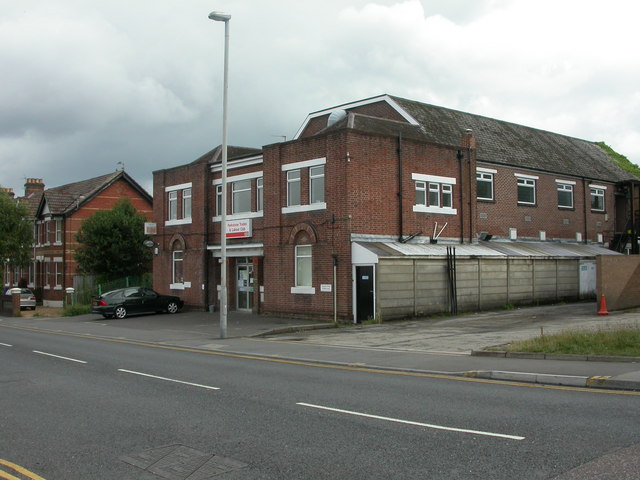
Cottage Industry – Parkstone Labour Club, Poole, Dorset, UK – 6th March 1985

18th Dec 2022 – Cottage Industry was the country band (may have just been solo, not sure now) of our local (Holtwood) youth club leader.
As kids, we had lots of fun fucking around and fucking things up at the youth club, often getting ourselves banned for periods of time.
I guess I was trying to ingratiate myself with him in some way and was also a little interested in learning about things musical as a player so I blagged a ride in the back of his van with the equipment and helped carry it in and out of the venue. I was kinda amused to be in this place, still not quite of drinking age and seemed to enjoy the atmosphere whilst not being particularly interested in the music.
I had grown up through my very early years in the north of England with the local country music scene as my mum’s boyfriend was a guitar player that played a lot at the time. Mum also played folk music at home sometimes too. This Cottage Industry shit certainly wasn’t punk rock and that was all I cared about at the time.
I guessed I learned something from this experience but probably didn’t recognise it at the time.

Just look at this place. I don’t know what I really expect places to look like but this just brings to mind the drabness of England. This picture contains the best of the English colour scheme. The stand-out colour in the picture is a fucking traffic cone.